
Every place we share has a world around it worth exploring — not from a tour bus window, but on foot, at a table, or waist-deep in a volcanic lake. These are the experiences our guests come back talking about. None of them require a reservation six months in advance. Most of them cost next to nothing. All of them are better than anything in a guidebook.
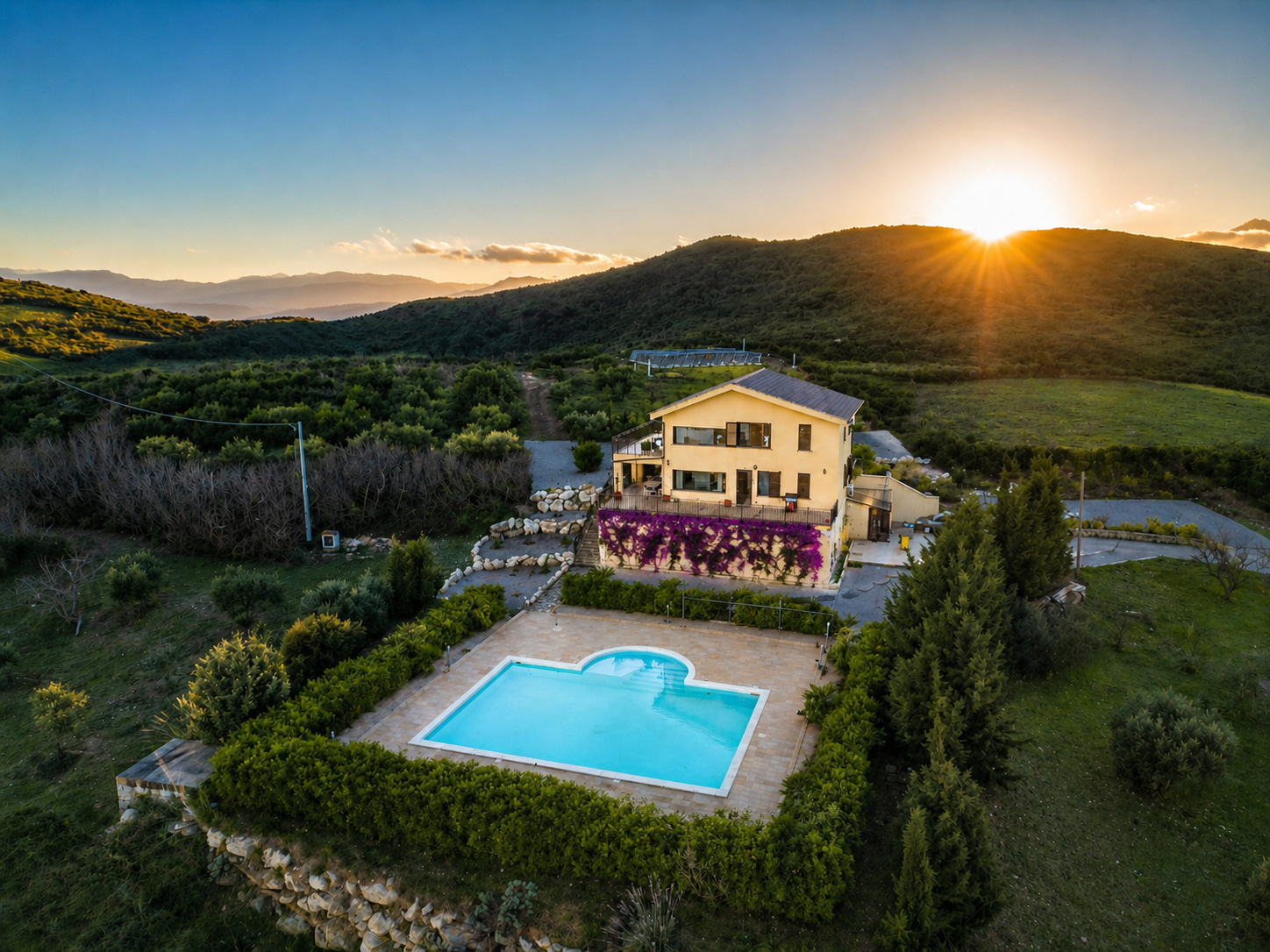
The ancient Etruscan heartland just north of Rome — and one of Italy’s best-kept secrets. Tuscia is where Romans escape when they want to eat well, soak in thermal springs, and avoid crowds. Our villa Two Sisters sits in the hilltop village of Bassano in Teverina, right at the meeting point of Lazio, Umbria, and Tuscany.
Soak in Ancient Thermal Springs
The thermal baths at Terme dei Papi outside Viterbo have been drawing visitors since Etruscan times — and the water hasn’t changed its mind about being extraordinary. A vast outdoor pool fed by natural hot springs sits beneath the medieval skyline of Viterbo, open year-round. Go on a weekday morning and you might have an entire corner to yourself. For something wilder, drive to the free thermal cascades at Bagnaccio, where hot sulphur water tumbles into stone pools in the middle of open countryside. No entrance fee, no turnstile, no gift shop — just hot water and sky.
Walk Across a Dying City
Civita di Bagnoregio sits on a crumbling tufa plateau, connected to the world by a single pedestrian bridge. The village is home to fewer than a dozen permanent residents, and the clay cliffs beneath it are slowly eroding away — which is exactly what gives it its haunted, impossible beauty. The views across the Valle dei Calanchi are some of the most surreal in Italy. Visit early morning or late afternoon when the day-trippers have left and you can hear your own footsteps echo off the stone.
Swim in Europe’s Largest Volcanic Lake
Lake Bolsena is the kind of place that makes you wonder why you ever fought for a sunbed on the Amalfi Coast. The water is clean, calm, and warm by midsummer, ringed by small fishing villages with dark volcanic sand beaches. Rent a boat and drift to Isola Bisentina, a tiny island with a Renaissance church and gardens that most tourists never see. Back on shore, the lakeside restaurants serve freshwater eel and coregone prepared in ways you won’t find anywhere else in Italy.
Hunt for Truffles in the Hills
Tuscia is serious truffle country — black truffles in summer, the prized white variety in autumn. Join a local truffle hunter and their dog for a morning walk through the oak and hazelnut forests around Bassano in Teverina. You’ll learn to read the landscape the way they do, and you’ll eat what you find, shaved over fresh pasta or scrambled eggs, usually at a table under the trees. This is not a polished tourist experience. It is a morning spent with someone who has been doing this their entire life.
Lose Yourself in a Garden of Monsters
The Sacro Bosco at Bomarzo is a sixteenth-century garden filled with massive, grotesque stone sculptures — a screaming face with a mouth you can walk into, a leaning house, an elephant crushing a Roman soldier. It was designed by a grieving prince to shock and unsettle, and four hundred years later, it still does. There is nothing else quite like it in Italy. Children love it. Adults find it strange and wonderful. Everyone takes too many photos.
Taste Wines With the Best Backstory in Italy
The local Est! Est!! Est!!! di Montefiascone has a name that demands an explanation — and the story behind it (involving a German bishop’s servant and a chalk marking system for ranking taverns in 1111 AD) is worth hearing over a glass. But Tuscia’s wine scene goes well beyond one famous name. The volcanic soil gives everything grown here a distinctive mineral edge. Visit a local cantina around Lake Bolsena or in the hills near Orvieto, and you’ll taste wines you cannot buy outside the region.
Explore What the Etruscans Left Behind
Before the Romans, there were the Etruscans — and Tuscia was the center of their world. The painted tombs at Tarquinia (a UNESCO World Heritage site) contain some of the most vivid frescoes to survive from the ancient world: scenes of banquets, musicians, dancers, and dolphins, all rendered with a liveliness that puts most Roman art to shame. At the Etruscan necropolis of Norchia, carved tombs sit abandoned in a dramatic gorge, with no ticket booth and no crowds. You can wander for hours.
Eat Like You Live Here
The weekly markets in Orte, Viterbo, and the surrounding villages are where local life happens. Stalls piled with seasonal produce — artichokes in spring, tomatoes and peppers in summer, chestnuts and porcini in autumn — alongside aged pecorino, fresh ricotta, local olive oil so green it looks like it’s still thinking about being an olive, and porchetta that puts the supermarket version to shame. Buy ingredients and cook at the villa, or ask us to arrange a cooking lesson with a local home cook who will teach you to make pasta the way her grandmother taught her.
Day Trip to Orvieto
Technically in Umbria, but only thirty minutes from Bassano in Teverina, Orvieto is a spectacular hilltop city built on volcanic tufa with a cathedral that will stop you in your tracks. Beneath the surface, a network of Etruscan and medieval tunnels runs through the cliff — bookable guided tours take you through caves, wells, and quarries dating back two thousand years. The town itself is compact enough to explore on foot in half a day, leaving the afternoon free for lunch at one of the trattorias along the quieter side streets.
Stay in Tuscia, Lazio
Sicily is not a place you visit — it is a place that happens to you. The light, the noise, the food, the way a conversation at a bakery can last forty-five minutes — it all gets under your skin. Our villa Two Brothers sits in the hills with views stretching from mountains to the sea, surrounded by six acres of olive groves. Everything below is within easy reach.
Hike an Active Volcano
Mount Etna is Europe’s tallest and most active volcano, and you can walk on it. Lower altitude trails wind through lava fields, old craters, and forests that have regrown in the decades since the last eruption reached them. Higher up, the landscape becomes lunar — black rock, steam vents, and views that stretch to the African coast on clear days. You can hike independently on the lower trails or take a guided trek to the summit craters. Either way, there is something quietly thrilling about standing on ground that is still making up its mind.
Eat Your Way Through a Sicilian Market
The fish market in Catania (La Pescheria) is not a sanitized tourist attraction. It is loud, chaotic, and magnificent — swordfish the size of a table, crates of sea urchins split open on the spot, vendors shouting prices that change by the hour. Surrounding the market, street food stalls sell arancini (fried rice balls stuffed with ragù), horse meat sandwiches, and the best granita you will ever taste. If Catania feels like too much energy, the smaller markets in hill towns near the villa offer the same ingredients at a gentler pace.
Drink Wine on a Volcano
Etna’s wine region has gone from obscure to internationally celebrated in the last decade, and the vineyards on its slopes — some planted with vines over a hundred years old — produce wines with a minerality and elegance that surprises everyone who tries them for the first time. Several small producers welcome visitors for tastings, often conducted by the winemaker themselves, on a terrace overlooking the vines with the volcano smoking gently in the background. Book ahead — these are working farms, not tasting rooms designed for Instagram.
Discover the Valley of the Temples
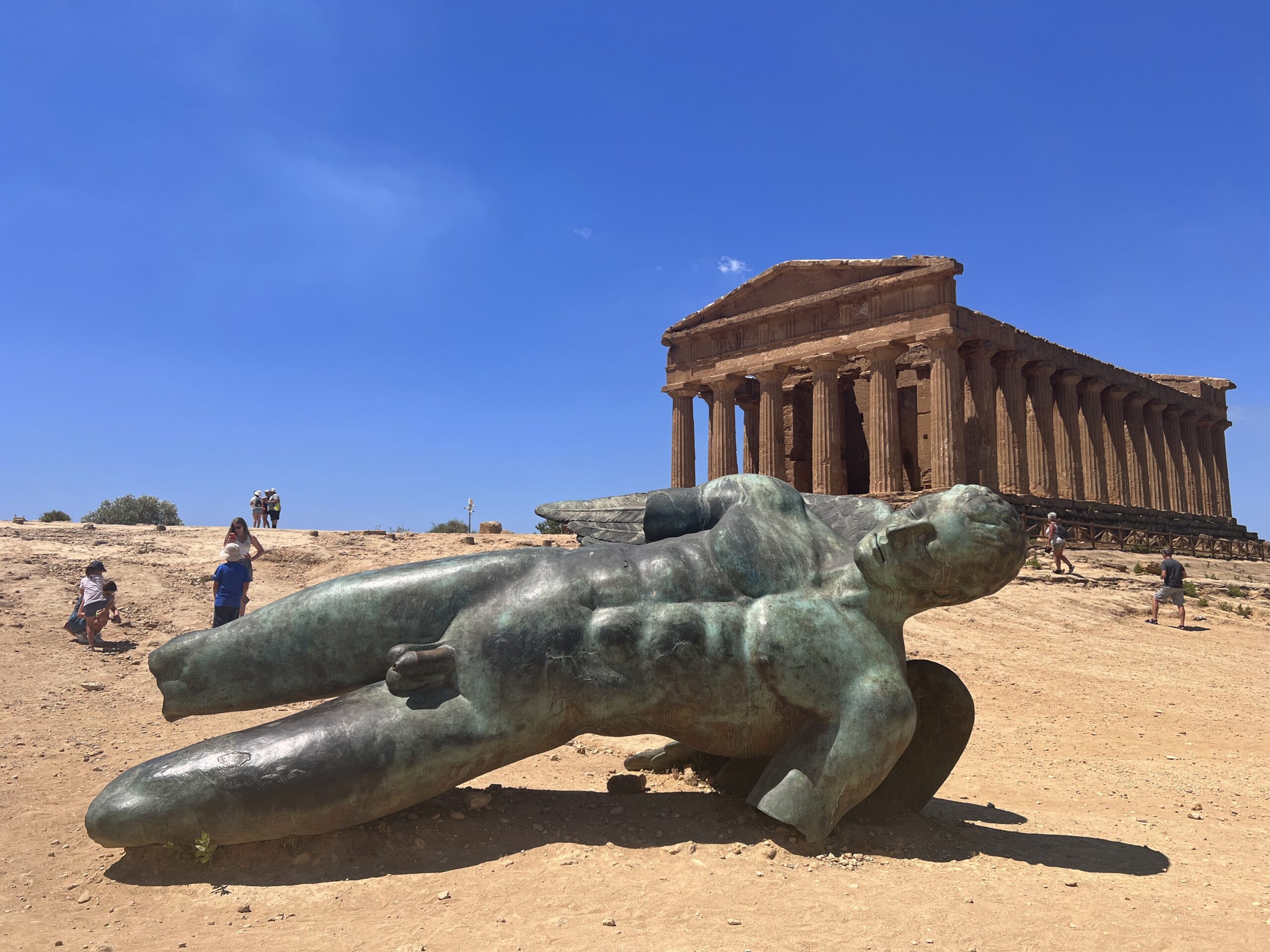
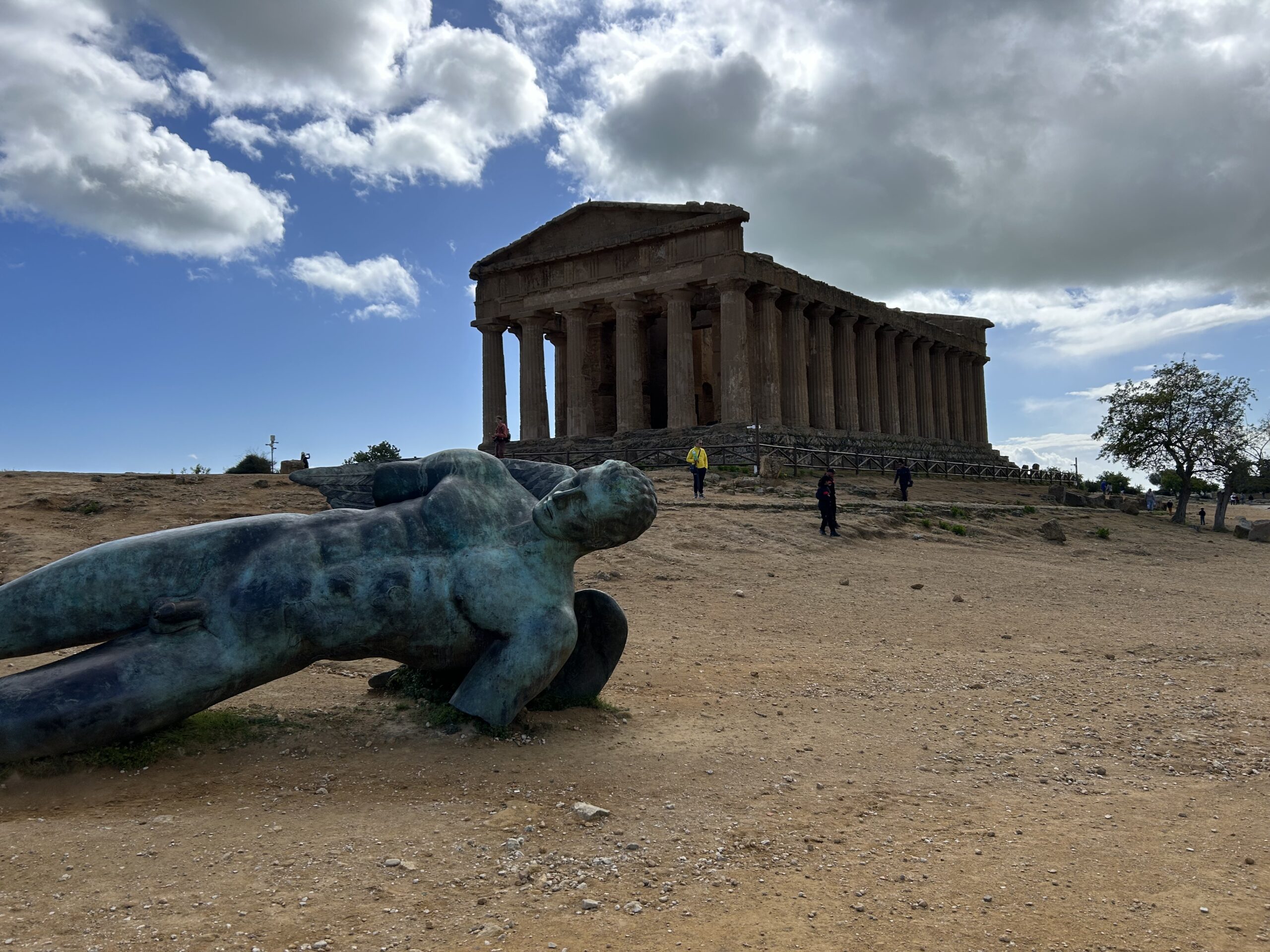
Agrigento’s Valle dei Templi is one of the most important collections of Greek ruins outside of Greece itself — a ridge of honey-coloured Doric temples dating from the fifth century BC, set against almond orchards and the distant sea. The Temple of Concordia is so well preserved it takes a moment to register that you are looking at something built two and a half thousand years ago. Visit in the late afternoon when the stone turns gold and the tour groups thin out. The site stays open for evening visits in summer, when it is lit dramatically against the night sky.
Swim in Hidden Coves
Sicily’s coastline ranges from long sandy beaches to rocky coves accessible only by boat or a scramble down a cliff path. The beaches near the villa are uncrowded by Mediterranean standards — the kind of places where you lay down a towel on volcanic rock, swim in water so clear you can count the fish, and eat a picnic of bread, cheese, and tomatoes bought from a roadside stand that morning. Ask us for our list of favourite swimming spots — we keep the best ones off the public recommendations.
Spend an Afternoon in Taormina
Perched on a cliff above the Ionian Sea, Taormina is undeniably beautiful and undeniably popular. The ancient Greek theatre — still used for summer performances — offers one of the most photographed views in Sicily, with Etna framed perfectly between its crumbling arches. The town itself is polished and tourist-facing, but that’s fine for an afternoon of wandering, gelato, and the kind of people-watching that Sicily does better than anywhere. Go in the morning or evening to avoid the worst of the crowds, and do not skip the view from Piazza IX Aprile at sunset.
Cook With What the Island Gives You
Sicilian cooking is not about technique — it is about ingredients grown in volcanic soil, kissed by sea air, and handled with the confidence of people who have been feeding their families this way for generations. We can arrange cooking experiences with local home cooks and small restaurant kitchens where you’ll make pasta alla Norma, caponata, or cannoli from scratch using ingredients bought at the market that morning. You’ll eat what you make, usually with far too much wine, and you’ll leave with recipes that actually work back home.
Stock Up on Pistachios in Bronte
The small town of Bronte, on Etna’s western slope, produces what many consider the finest pistachios in the world — vivid green, intensely flavoured, and used in everything from pasta pesto to gelato to the crumbly pistachio cookies sold in every bakery in town. If you visit during the annual Pistachio Festival in September, the entire town turns green. Even outside the festival, a stop in Bronte to buy a bag of pistachios and eat pistachio gelato from Bar Luca or Savia is one of those small Sicilian pleasures that stays with you.